When you start with print on demand, you mostly think about design and niche. But how the design ends up on a t-shirt decides its look, feel and durability — and that's where the print method comes in. The three most common ones are DTG, DTF and sublimation.
You don't need to turn it into a science, but a basic grasp helps you pick the right product and POD service and avoid disappointment with your sample. We'll go through each method without jargon and, at the end, say when to use which. If you're just starting out, read the beginner's guide to print on demand first.
Why the print method matters
The method determines how vivid the colors are, how the print feels to the touch, how long it survives the wash and what materials you can even print on. The same artwork can look premium on one shirt and cheap on another — the difference is often not the design, but the print method and the base garment.
For you as a seller this means one thing: before you list a product, order a sample and feel the real result. A sample also shows you whether the chosen method fits your price point and what the audience expects.
DTG — direct-to-garment
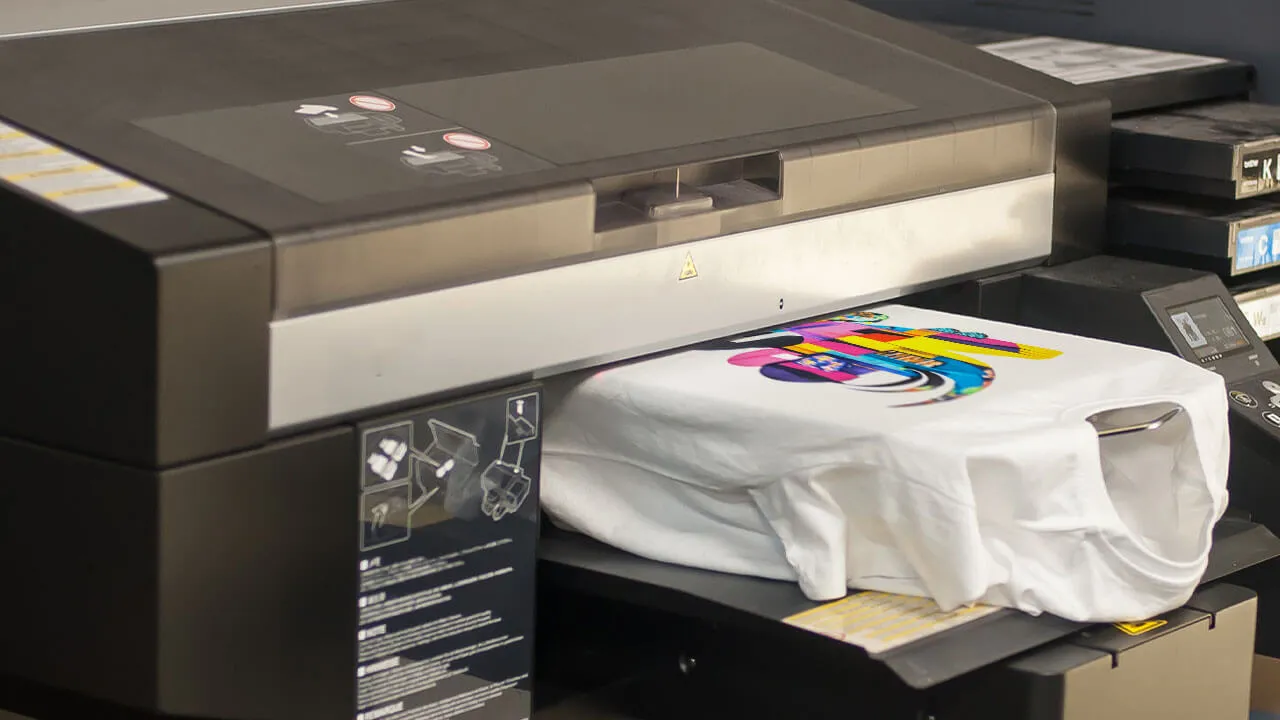
DTG works like a large inkjet printer for textiles: ink is applied directly into the cotton fibers. It handles photorealistic, multicolor designs with no surcharge for the number of colors, the result is soft to the touch and "blends" into the fabric. It works best on 100% cotton.
It's the most common choice for t-shirts and hoodies at POD services with in-house production. The price for that quality is sensitivity to material (results can be weaker on blends and dark fabrics) and a slightly higher cost. For classic cotton tees with detailed prints, DTG is the gold standard.
DTF — direct-to-film
DTF first prints the design onto a special film, which is then heat-transferred onto the fabric. Its big advantage is versatility: it holds on cotton, polyester and blends and works great even on dark material, because a white underbase goes beneath the color. Colors tend to be more vivid than with DTG.
The print is slightly noticeable to the touch (it sits "on" the fabric rather than in it) and cheap versions can crack over time — quality therefore varies from piece to piece and service to service. For vivid logos, sportswear and blended materials, though, DTF is a very practical choice.
Sublimation
Sublimation only works on polyester (and specially coated surfaces): heat "fuses" the color directly into the fiber, so you can't feel the print at all and it doesn't crack. It enables all-over print across the entire product edge to edge — something neither DTG nor DTF can do.
The limitation is fundamental: it doesn't work on cotton or on dark bases, because sublimation ink is translucent. That's why sublimation rules products like mugs, mousepads, pillows, flags or polyester sports jerseys — there it's unbeatable.
What about embroidery and stickers
Beyond textile printing, POD services also offer embroidery — it looks premium on caps, polos and hoodies, but only handles simpler designs without fine detail and gradients. For logos and minimalist brands, though, it's ideal.
Stickers and decals are a separate category with their own technology (kiss-cut, die-cut) — we covered those in the Sticker Mule vs Printify comparison if you mainly want to sell them.
Which method to choose
- DTG — cotton tees and hoodies, detailed and multicolor designs, soft feel.
- DTF — blended and dark materials, vivid logos, sportswear; versatile, but the print is noticeable.
- Sublimation — polyester products and all-over print (mugs, jerseys, accessories); doesn't work on cotton or dark bases.
- Embroidery — a premium look on caps and polos, simple designs only.
In practice you rarely pick the method directly — you pick the product and POD service, and it uses the method that suits that product. You'll find the widest product (and method) selection at the big platforms; browse their catalog in the POD services overview or get a service recommended for your goal via the configurator.
PODpickr is an independent comparison site. We base our recommendations on score, not on the size of the affiliate commission.